Build and Evolve Your
Mobile Network with
Flexible Core Network Solutions
Deploy, modernize and scale 4G and 5G mobile core networks with flexible architecture, seamless network integration and expert technical support.
What Is an MNO Solution?
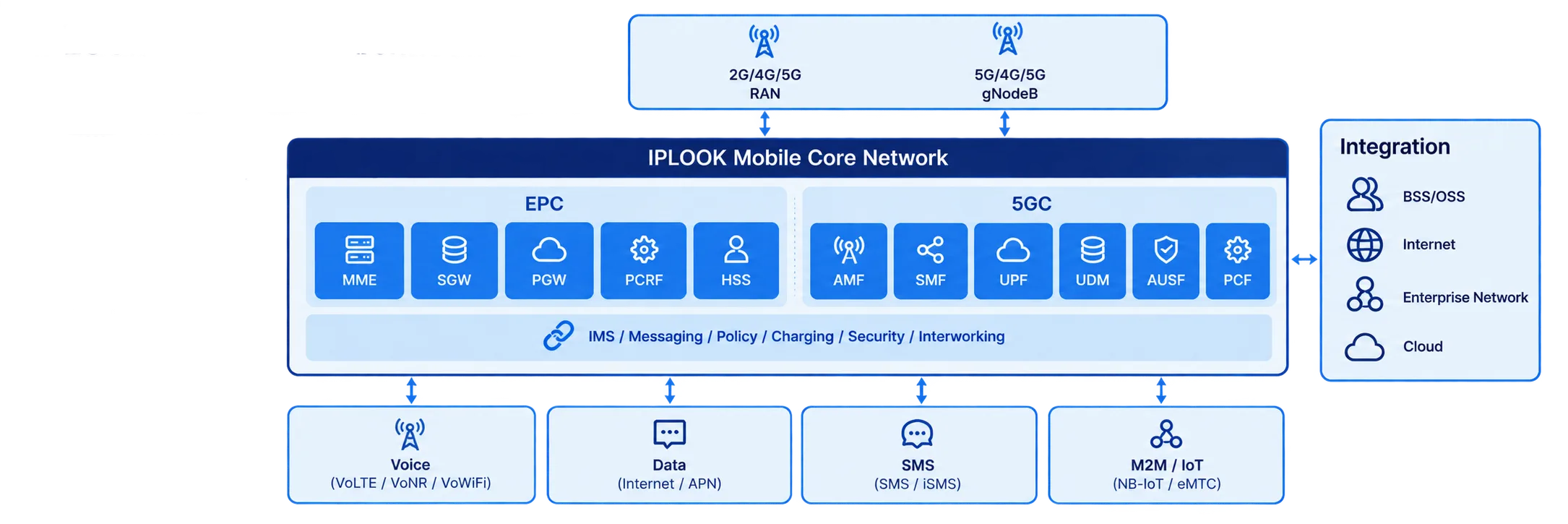
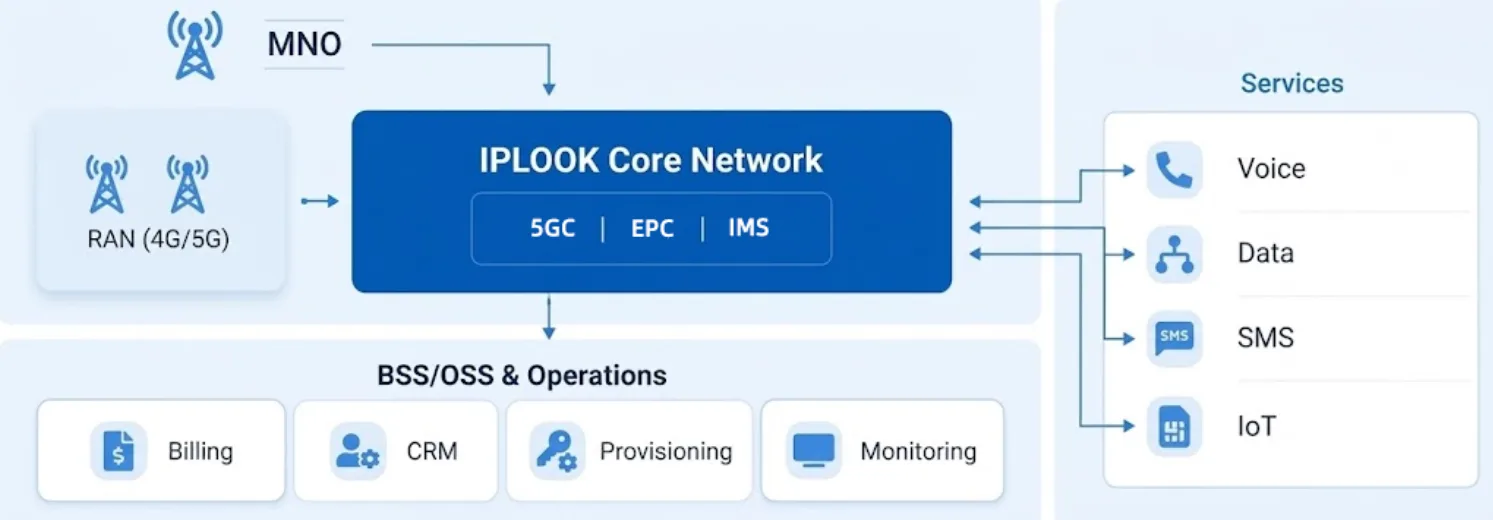
An MNO (Mobile Network Operator) solution provides the core network infrastructure, network functions and integration capabilities required for a mobile network operator to deliver mobile connectivity and communication services to end users.
Key Challenges for Mobile Operators
Modern MNOs need to balance network performance, operational efficiency and business growth while meeting evolving user demands.
Network Modernization
Evolve from 4G to 5G with minimal disruption.
Multi-Generation Networks
Support 3G/4G/5G coexistence.
Subscriber Growth
Handle increasing users and data traffic.
Network Integration
Connect RAN, IMS, BSS/OSS and more.
Operational Complexity
Improve automation, visibility and efficiency.
Evolve from 4G to 5G
Support your network evolution with a smooth transition path from 4G EPC to 5G Core, and beyond.
4G EPC
Proven and stable core network
4G + 5G NSA
Coexistence and initial 5G services
Converged Core
EPC + 5GC integration
5G SA
Full 5G capabilities and network slicing
5G Advanced
More performance, more possibilities
Why Choose IPLOOK for MNOs?
Proven technology, Flexible deployment, Long-term partnership.
Your Network. Our Expertise.
IPLOOK helps mobile operators build, modernize and grow their networks with reliable technology and professional services.
About IPLOOKMNO Use Cases
Trusted by mobile operators worldwide across different regions and scenarios.

National Operators
Nationwide mobile networks and services.

Regional Operators
Regional coverage and local services.

Greenfield Operators
Build your network from scratch.

4G/5G Modernization
Upgrade to 5G with minimal disruption.

FWA
Fixed wireless access for homes and businesses.

IoT Connectivity
Massive device connectivity for industrial and smart city.
From Network Design to Commercial Launch
A proven process to ensure your MNO project is delivered on time, within budget and with long-term stability.
Requirements Assessment
Define goals, capacity and coverage
Network Architecture Design
Plan the right solution for your business
Testing & Interoperability
Validate performance and compatibility
Traffic & Performance Testing
Optimize for stability and capacity
Commercial Launch
Go live with your mobile services
Operation & Optimization
Continuous monitoring and improvement
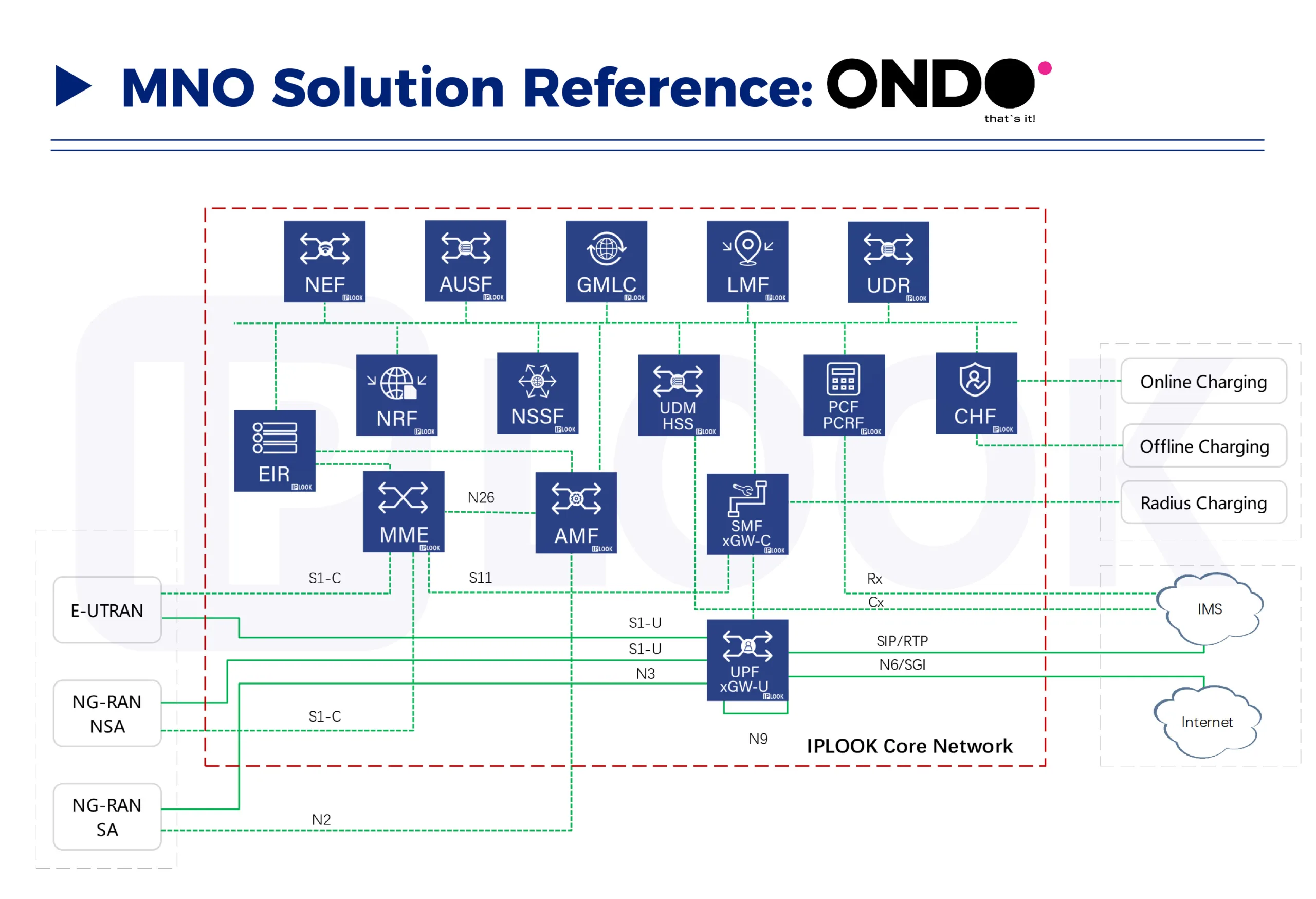
ONDO MNO - Mongolia
IPLOOK deployed a 4G core network to support ONDO MNO's mobile services in Mongolia, with high capacity and reliable performance in the capital city.
Frequently Asked Questions
Find answers to common questions about IPLOOK MNO core network solutions, deployment, integration, and migration.
An MNO (Mobile Network Operator) solution provides the core network infrastructure and supporting functions required to deliver mobile connectivity and services to subscribers over licensed radio networks. Depending on the operator's network architecture, this can include 4G EPC, 5G Core, subscriber management, policy control, charging, and IMS-based voice services.
An MNO core network typically includes 4G EPC and/or 5G Core functions, subscriber management, policy control, mobility management, data connectivity, charging, and voice service components. IPLOOK provides core network products covering EPC, 5GC, IMS, subscriber management, policy control, and related network functions for different deployment requirements.
EPC is the core network architecture used by 4G LTE, while 5G Core is designed for 5G networks and uses a service-based architecture. 5G Core introduces functions and capabilities designed for 5G services, while EPC continues to support existing 4G subscribers and services. Operators can use either architecture or evolve from EPC toward 5G Core based on their network and deployment requirements.
Yes. An MNO can operate 4G EPC and 5G Core as part of a multi-generation network strategy. This approach allows operators to continue supporting existing 4G services while introducing 5G services and gradually evolving their core network architecture.
EPC-to-5G Core migration can be planned as a phased network evolution rather than a single replacement. An operator can continue operating existing 4G services while introducing 5G Core functions and gradually expanding 5G standalone capabilities. The migration approach depends on the operator's RAN environment, subscriber base, service requirements, and target network architecture.
IPLOOK core network solutions are designed around 3GPP-based mobile network architectures and standard interfaces. This enables integration with existing RAN environments and allows operators to build their core network according to their existing network architecture and deployment requirements. Specific interoperability requirements can be evaluated during solution design and integration.
IPLOOK supports IMS-based voice services including VoLTE, VoNR, and VoWiFi. These capabilities can be integrated with the mobile core network to support voice services across 4G and 5G network environments, depending on the operator's architecture and service requirements.
IPLOOK core network solutions can be deployed in different infrastructure environments, including on-premises bare-metal servers, private cloud environments, and public cloud infrastructure. The appropriate deployment model depends on the operator's performance, scalability, infrastructure, security, and operational requirements.
IPLOOK supports MNO projects through services including network planning, architecture design, customized deployment, system integration, and ongoing technical support. The scope of services can be adapted to the operator's network architecture, deployment objectives, and operational requirements.
Yes. IPLOOK can support different stages of an MNO core network project, including network planning, architecture design, solution customization, deployment, system integration, testing, and technical support. The exact project scope is determined according to the operator's network requirements and deployment plan.